The Future of New Construction: What Homebuyers Want in 2026 and What Northwest Indiana Is Missing
For years, new construction followed a familiar formula: build a larger house, add another bedroom, stretch the garage and assume buyers would pay more for the additional square footage.
That formula is changing.
Today’s buyers are balancing mortgage rates, property taxes, insurance, utilities and everyday living expenses. They still want a beautiful new home, but many are becoming less interested in paying for rooms they rarely use.
The strongest new-construction homes are not necessarily the largest or the cheapest. They are the homes that combine a manageable payment with an efficient floor plan, attractive finishes, practical storage and features buyers will actually use.
The market is shifting from:
“How large can we build it?”
to:
“How much value can we fit into every square foot?”
New Homes Are Becoming Smaller, but Not Tiny
The national trend is not toward miniature homes. It is toward right-sized homes.
According to the U.S. Census Bureau, the median new single-family home sold in 2025 contained approximately 2,194 square feet. The median size of all newly completed single-family homes was slightly smaller at approximately 2,142 square feet. In addition, 41% of homes built for sale were constructed on lots smaller than 7,000 square feet.
The National Association of Home Builders reported that median new-home size fell from approximately 2,300 square feet between 2019 and 2022 to roughly 2,150 square feet in 2024. It remained near that level during 2025.
That may not sound like a dramatic change, but it represents an important shift in builder strategy.
Builders are reducing unnecessary square footage and smaller lots are becoming more common because both can help control the final purchase price. However, buyers do not want these homes to feel stripped down, cramped or cheaply finished.
A smaller home still needs to feel complete.
Buyers Are Choosing Better Space Over More Space
Today’s buyers are increasingly willing to trade unused square footage for better design.
Instead of a formal living room that may rarely be used, buyers may prefer a home office, playroom or flex space. Instead of a large foyer, they may value a drop zone, mudroom or organized storage area. Instead of an oversized dining room, they may choose a larger kitchen island and walk-in pantry.
Builders surveyed for 2026 expect to incorporate more transitional and multipurpose spaces, including drop zones, flexible rooms and electric-vehicle charging capability.
The most valuable features are often not the flashiest ones. They are the features that make daily life easier:
-
Walk-in pantries
-
Dedicated laundry rooms
-
Kitchen islands
-
Mudrooms and drop zones
-
Durable flooring
-
Energy-efficient windows and mechanical systems
-
Flexible offices or bonus rooms
-
Covered patios and outdoor living areas
-
Better storage
-
Wider garages with room for vehicles and household items
Buyers may accept a smaller home, but they still want a kitchen that feels upgraded, a primary suite that feels comfortable and enough storage to prevent the house from feeling crowded.
The winning formula is increasingly:
less wasted space, better finishes and a more manageable payment.
The Monthly Payment Is Now Part of the Floor Plan
Builders are not only competing through architecture and finishes. They are competing through financing.
The median price of a newly sold home in the United States was approximately $398,300 in June 2026, compared with $409,200 one year earlier. At the same time, the national supply of new homes stood at approximately 9.3 months at the current sales rate.
That level of inventory gives buyers choices and puts pressure on builders to make the numbers work.
Nationally, builders have responded by offering:
-
Mortgage-rate buydowns
-
Closing-cost assistance
-
Design and appliance packages
-
Reduced lot premiums
-
Quick-move-in discounts
-
Direct price reductions
NAHB reported that 67% of builders were using sales incentives entering 2026, while 41% were cutting home prices.
This can give new construction an advantage over resale homes. A resale seller normally cannot offer the same type of below-market financing program available through a builder and its preferred lender.
For many buyers, the question is no longer:
“What is the list price?”
It is:
“What will this home cost me each month?”
A slightly higher-priced new home with a substantial rate buydown may produce a lower payment than an older resale home with a higher interest rate and immediate repair needs.
Townhomes and Attached Homes Are Becoming Mainstream
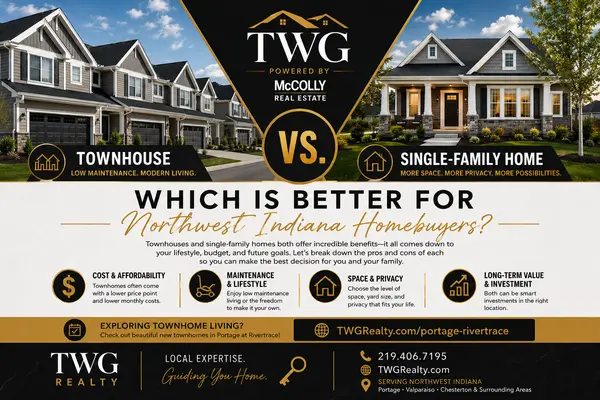
Detached single-family homes remain the dominant preference in many communities, but attached housing is becoming a larger part of the national new-construction market.
Townhomes accounted for approximately 10% of single-family construction in 2009. Their share rose to 17% by 2024 and reached a multidecade high of more than 18% entering 2026.
Construction of “missing middle” housing, including duplexes, townhomes and smaller multifamily properties, also reached its highest annual volume since 2007 during 2025.
Why is this happening?
Attached homes can reduce the amount of land, infrastructure and exterior construction required for each residence. That can create a lower purchase price while still providing homeownership, a private entrance, usable living space and, in many cases, an attached garage.
These homes can appeal to several different buyer groups:
-
First-time buyers
-
Single professionals
-
Small families
-
Retirees
-
Empty nesters
-
Buyers who travel frequently
-
Homeowners who no longer want extensive lawn and exterior maintenance
For many buyers, a newer townhome or paired villa in a convenient location may be more attractive than an older detached home that needs a roof, windows, furnace, kitchen and extensive cosmetic updates.
What Types of New Homes Are Positioned to Sell Best?
There is no single floor plan that will dominate every market. Land costs, school systems, property taxes, buyer incomes and local preferences all matter.
However, several product categories appear especially well positioned.
Attainable Starter Homes
A well-designed home between approximately 1,300 and 1,700 square feet can provide:
-
Three bedrooms
-
Two bathrooms
-
An open kitchen and living area
-
A pantry
-
Dedicated laundry space
-
An attached garage
-
A patio or small covered porch
These homes do not need complicated rooflines, oversized foyers or multiple formal rooms. They need good curb appeal, efficient construction and enough storage to remain functional.
Smaller Upscale Ranches and Villas
A ranch between approximately 1,500 and 1,900 square feet may appeal to downsizers, retirees, couples and buyers who want long-term accessibility.
The strongest versions typically include:
-
Two or three bedrooms
-
Two full bathrooms
-
A two-car garage
-
Main-level laundry
-
A quality kitchen
-
Wider hallways and doorways
-
A covered patio or sunroom
-
Optional lawn and snow services
The key is creating a smaller home that still feels upscale.
Right-Sized Family Homes
Many families do not need 3,500 square feet, but they may need more flexibility than a traditional starter home provides.
A home between approximately 1,900 and 2,400 square feet can offer:
-
Three or four bedrooms
-
Two-and-a-half bathrooms
-
A home office or flex room
-
A walk-in pantry
-
A mudroom
-
A comfortable primary suite
-
A usable backyard
-
An optional basement
This category can serve buyers who want something noticeably better than an entry-level home without crossing into luxury-home pricing.
Multigenerational and Adaptable Homes
More buyers are looking for homes that can accommodate changing family needs.
That may include:
-
A main-floor bedroom
-
A nearby full bathroom
-
A second living area
-
A finished basement
-
Space for an older parent
-
A private area for an adult child
-
A room that can transition from office to bedroom
A flexible home can serve the buyer today while adapting to their needs five, ten or twenty years from now.
How Does Northwest Indiana Compare?
Northwest Indiana is building homes, but the larger question is whether we are building enough of the right kinds of homes.
The Northwest Indiana Forum reported that the region averaged approximately 2,400 new residential building permits annually over a recent four-year period. Even with that construction, the organization concluded that housing demand was continuing to expand faster than supply. During the same period, the typical Northwest Indiana home value increased approximately 42%, compared with a 31% increase throughout the Chicago metropolitan area.
The Indiana Business Research Center has also identified an acute shortage of affordable housing for the people already living and working in Northwest Indiana.
The issue is therefore not simply the total number of homes being built.
The issue is price, product type and variety.
Northwest Indiana Is Still Heavily Focused on Traditional Single-Family Construction
In 2025, Northwest Indiana’s seven-county economic development region permitted 2,326 residential units.
Of those:
| Housing Type | Units Permitted | Share of Total |
|---|---|---|
| Single-family homes | 2,221 | 95.5% |
| Two-family homes | 18 | 0.8% |
| Three- and four-family homes | 0 | 0.0% |
| Buildings with five or more units | 87 | 3.7% |
By comparison, single-family homes represented approximately 68.4% of residential units permitted statewide.
This does not mean Northwest Indiana should stop building detached homes. Buyers still want them, and they will remain an important part of our market.
However, the numbers suggest that our construction pipeline offers considerably less variety than Indiana as a whole.
In many Northwest Indiana communities, buyers may find:
-
An older resale home that needs substantial updating
-
A traditional new-construction home at a significantly higher price
-
An apartment
-
Very little in between
That missing middle is where some of the region’s largest housing opportunities may be hiding.
What Northwest Indiana May Be Lacking
1. Attainable New Starter Homes
Northwest Indiana needs more new homes designed around an affordable monthly payment.
That does not necessarily mean extremely small homes or inexpensive-looking finishes. It means controlling land costs, simplifying floor plans and eliminating square footage that buyers do not value enough to pay for.
A thoughtfully designed 1,400-square-foot home can live better than a poorly planned 1,900-square-foot home.
The ideal starter product might include three bedrooms, two bathrooms, a modest attached garage, an attractive kitchen, durable finishes and a small outdoor area.
The goal is not to build the cheapest possible house.
The goal is to build the most complete house possible at an attainable price.
2. Smaller Upscale Ranches
Northwest Indiana has a significant population of homeowners approaching retirement or already in retirement. Seniors represented approximately 20% of the region’s population in 2025. Married households without children accounted for approximately 30% of households, while nearly 29% of households consisted of someone living alone.
That creates a substantial potential market for smaller ranches, villas and low-maintenance homes.
Many homeowners would consider downsizing, but they do not want to move into an apartment or sacrifice quality.
They may want:
-
One-level living
-
Two or three bedrooms
-
Two full bathrooms
-
A two-car garage
-
A quality kitchen
-
A covered patio
-
Minimal exterior maintenance
-
Lawn and snow services
-
A neighborhood close to shopping, healthcare and family
A 1,600-square-foot ranch with excellent finishes may be more attractive to this buyer than a basic 2,500-square-foot two-story.
3. Townhomes, Paired Villas and Owner-Occupied Duplexes
Northwest Indiana could benefit from more attached ownership options.
That includes:
-
Two-story townhomes with garages
-
Ranch-style paired villas
-
Owner-occupied duplexes
-
Cottage-home communities
-
Small condominium developments
-
Low-maintenance communities near downtowns and commuter stations
These products can create a bridge between renting and purchasing a traditional detached home.
They can also give existing homeowners somewhere to downsize, potentially freeing up additional resale inventory for younger families.
4. Right-Sized Move-Up Homes
There will continue to be demand for larger and more expensive custom homes, especially in communities such as Crown Point, St. John, Dyer, Munster, Valparaiso and Chesterton.
However, not every move-up buyer wants a 3,500-square-foot home with a large basement and three-car garage.
There is room for more homes between approximately 1,900 and 2,400 square feet that offer:
-
Three or four bedrooms
-
A better kitchen
-
A home office
-
A mudroom
-
A walk-in pantry
-
A quality primary suite
-
A covered outdoor space
-
An optional basement
This buyer wants an upgrade, but they also want financial breathing room.
5. Homes Designed for Multigenerational Living
Northwest Indiana’s relatively affordable cost of living compared with portions of the Chicago metropolitan area continues to attract families.
Some of those buyers need space for aging parents, adult children or extended family members.
Builders do not necessarily need to construct two complete homes under one roof. A main-floor bedroom, full bathroom and small secondary living space may be enough to dramatically expand a home’s potential buyer pool.
6. Infill Housing Near Existing Amenities
Some of the region’s best opportunities may not require another large subdivision at the edge of town.
Smaller infill developments near downtown districts, existing utilities, shopping, parks and South Shore Line stations can add housing in places where people already want to live.
Potential opportunities include:
-
Townhomes near downtown areas
-
Villas near healthcare and shopping
-
Homes on vacant municipal lots
-
Residential units above commercial space
-
Smaller developments on irregular parcels
-
Mixed-use communities near commuter stations
Infill construction can strengthen existing neighborhoods while giving buyers access to amenities without requiring every trip to begin with a long drive.
Brent’s Take
Northwest Indiana does not simply need more homes.
It needs a wider ladder of housing choices.
We need starter homes that do not immediately leap into move-up pricing. We need attractive ranches for homeowners who want to downsize without leaving their community. We need townhomes and villas for buyers who want ownership with less maintenance. We need right-sized family homes that prioritize kitchens, storage and flexible space over unnecessary square footage.
The best opportunity may not be the smallest home or the largest home.
It may be the home that causes a buyer to walk inside and say:
“This has everything we actually need, and the payment still works.”
That is where I believe the future of new construction is heading nationally, and it may be one of Northwest Indiana’s biggest opportunities.
Considering New Construction in Northwest Indiana?
Whether you are comparing builders, reviewing available incentives, purchasing a quick-move-in home, considering building on your own lot or evaluating a potential development opportunity, local market knowledge matters.
The right home is not simply the newest or the largest. It is the home that fits your needs, your budget and the way you actually live.
Brent W. Wright, REALTOR®
TWG Powered by McColly Real Estate
219.406.7195
www.TWGRealty.com
Categories
- All Blogs (89)
- affodability (1)
- Brent's Market Minute (9)
- Build Your Dream Home (4)
- Buyers (4)
- Buying & Selling Homes (16)
- buying a home (11)
- Cedar Lake IN (1)
- Cedar Lake Indiana Real Estate (1)
- Chesterton IN Real Estate (2)
- Crown Point IN (4)
- Crown Point Indiana Real Estate (1)
- First-Time Homebuyers (8)
- Golf Course Communities (1)
- Griffith Indiana Real Estate (1)
- Home Buying Tips (10)
- Home for sale (22)
- home values (1)
- Homes for Sale (4)
- Houses for sale (3)
- Housing Market Trends (8)
- Just Listed (2)
- Lake County Indiana Real Estate (2)
- Land & Acreage (1)
- LaPorte County Indiana Real Estate (2)
- Local Market Insighs (2)
- Lots & Land (1)
- Luxury Homes (1)
- Market Update (2)
- Mortgage & Interest Rate Insights (1)
- Munster Indiana (1)
- New Construction (5)
- Northwest Indiana Real Estate (33)
- Northwest Indiana Real Estate Market Updates (11)
- Portage IN (11)
- Portage IN Homes for Sale (6)
- Portage IN Real Estate (8)
- Portage Indiana Homes for Sale (5)
- Portage Indiana Real Estate (1)
- Porter County Indiana Real Estate (2)
- Porter County Real Estate (2)
- Real Estate (41)
- Real Estate Guides (9)
- Real Estate Listings (4)
- Relocation (1)
- RiverTrace Subdivision (4)
- Sellers (3)
- selling a home (3)
- St. John Indiana Real Estate (1)
- Townhomes (2)
- Valparaiso Homes for Sale (2)
- Valparaiso IN (5)
- Westville IN (1)
Recent Posts